
You can’t afford to skip asbestos testing before renovation work begins. Pre-1980s buildings commonly contain asbestos in insulation, tiles, roofing, and siding—materials you’ll likely encounter. Late detection derails your timeline, inflates costs through specialized abatement contractors, and exposes your crew to hazardous fibers. Testing upfront protects worker health, guarantees EPA compliance, and maintains your project schedule. You’ll demonstrate professionalism to clients while avoiding costly legal liabilities. Understanding exactly which materials require attention and how to integrate testing into your workflow makes the difference between smooth projects and expensive complications.
Key Takeaways
- Late asbestos discovery causes expensive abatement work, project delays, and potential legal liabilities for contractors.
- Pre-renovation testing protects worker health by identifying hazardous materials before crews face exposure risks.
- Certified asbestos inspections ensure compliance with EPA and state environmental regulations throughout renovations.
- Scheduled testing prevents unexpected project complications and maintains realistic timelines and budget estimates.
- Demonstrating professional safety protocols through pre-testing builds client trust and contractor credibility.
Introduction|How older structures create risk for contractors|The cost of discovering asbestos after a job has started|Why testing protects crews, clients, and timelines|Common materials that deserve attention before tear-out|How contractors can build testing into project workflow|Conclusion
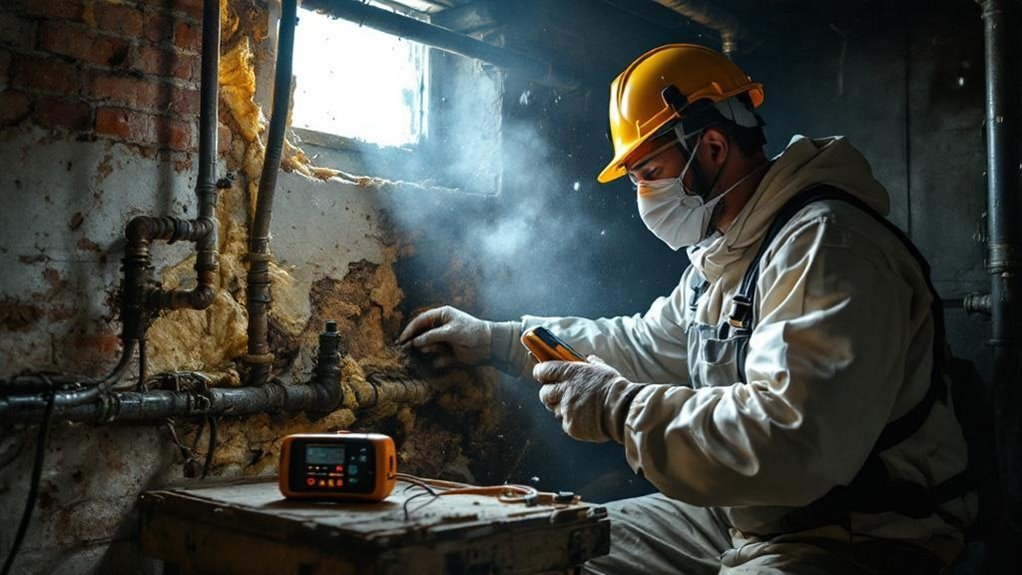
When you’re planning a renovation project on a pre-1980s building, asbestos testing isn’t optional—it’s a critical safeguard that can make or break your timeline and budget. Older structures pose significant risks since asbestos lurks in insulation, tiles, roofing, and siding—materials you’ll encounter during demolition. Uncovering asbestos after work begins creates costly delays, requires specialized abatement contractors, and exposes your crew to hazardous fibers. Pre-renovation asbestos testing identifies these materials before tear-out begins, allowing you to plan accordingly and guarantee renovation compliance with asbestos standards. A contractor asbestos inspection protects your team’s health, maintains project schedules, and demonstrates professionalism to clients. Certified inspectors use industry-leading techniques to minimize fiber disturbance during sample collection while maintaining strict compliance with EPA and Georgia Environmental Protection Division guidelines. Whether you’re in Gainesville or beyond, partnering with certified professionals for asbestos testing before demo transforms potential disasters into manageable project phases.
Frequently Asked Questions
What Certifications and Credentials Should Asbestos Testing Professionals Have?
You’ll want professionals who hold EPA accreditation, state licensing, and NACA certification. They’re your safeguard—ensuring you’re working with inspectors who understand asbestos hazards and follow rigorous protocols that protect your team and projects.
How Long Does Asbestos Testing Typically Take Before Renovation Work Begins?
You’ll want to plan ahead—an ounce of prevention’s worth a pound of cure. Your standard asbestos inspection takes 1-3 days, including sampling and lab analysis. You’re protecting your team’s health and your project’s timeline by testing upfront before renovation begins.
What Geographic Regions or Building Types Face Highest Asbestos Contamination Risks?
You’ll find highest contamination risks in pre-1980s structures across the Northeast and Midwest, particularly in industrial buildings, schools, and residential properties. Popcorn ceilings, pipe insulation, and floor tiles pose your greatest concerns in these regions.
Are Asbestos Testing Costs Tax-Deductible or Recoverable as Project Expenses?
You’re building a foundation for protection—and yes, asbestos testing costs you’ll typically deduct as project expenses or capital improvements. Partner with professionals who document everything; that’s how you’re keeping your liability covered and your books compliant.
What Documentation Should Contractors Maintain After Asbestos Testing Is Completed?
You’ll want to keep your inspection reports, lab results, chain-of-custody forms, and any abatement invoices. You’re protecting your crew and yourself by maintaining complete documentation that proves you’ve met all regulatory requirements.
Conclusion
You’re steering your renovation projects like a captain maneuvering through treacherous waters. Pre-renovation asbestos testing serves as your navigational chart, revealing hidden hazards before you hit the rocks. Skip this vital step, and you’ll run aground on liability, health risks, and project delays. Professional testing isn’t an expense—it’s your insurance policy. You’ll maneuver safely, protect your crew, and reach your destination intact.
Recent Comments