
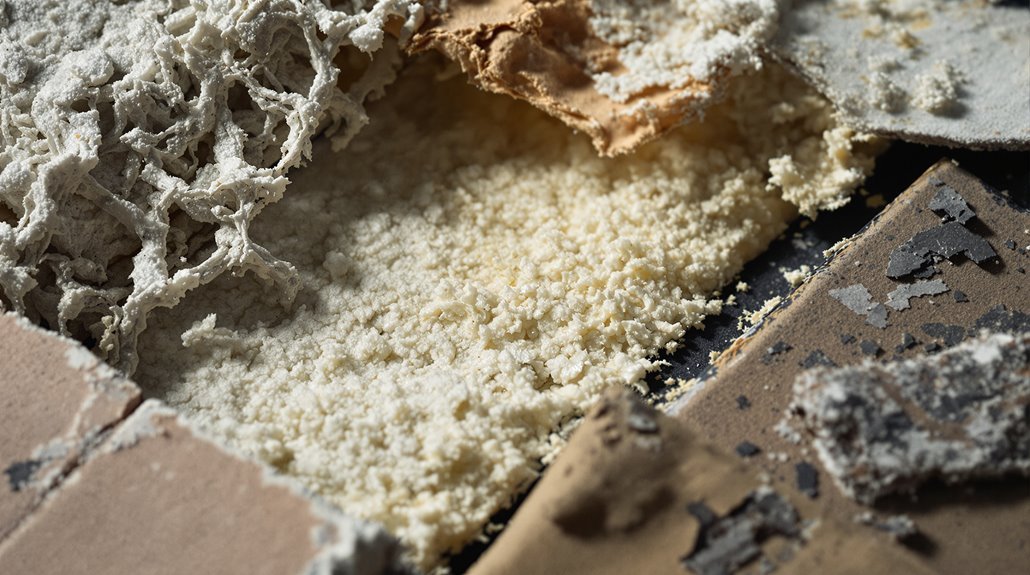
If you’re renovating a pre-1980s home, you’ll likely encounter asbestos in floor tiles, pipe wrapping, insulation, roofing materials, and siding. These materials were standard since asbestos offered fire resistance, durability, and insulation benefits. While undisturbed materials pose minimal risk, renovation work can release dangerous microscopic fibers. You can’t identify asbestos visually—professional testing by state-licensed inspectors using EPA-compliant methods is crucial before starting any project. Understanding specific material locations and risks will help you proceed safely.
Key Takeaways
- Asbestos floor tiles are commonly found in older homes as standard construction materials.
- Pipe wrapping and insulation in older buildings frequently contain asbestos components.
- Roofing materials and asbestos siding were popular in pre-1980s home construction.
- Many building materials in older homes contained asbestos for fire resistance and durability.
- Professional testing is necessary to definitively identify asbestos in older home materials.
Introduction|Why asbestos was used in older homes|Common building materials that may contain asbestos|When intact materials are lower risk and when damage changes the situation|Why visual identification is not enough|How professional asbestos testing confirms the material|Conclusion
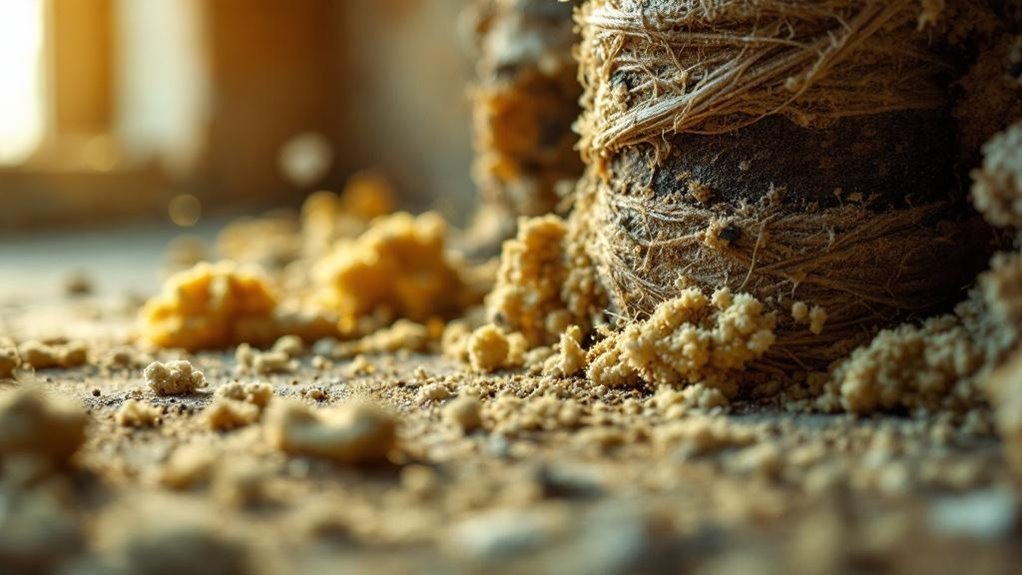
If you’re planning renovations or repairs in a home built before the 1980s, you’ll want to understand asbestos risks before you start. Many building materials with asbestos were standard construction components, making older homes potential hazard zones. Manufacturers favored asbestos for its fire resistance, durability, and insulation properties. You’ll likely encounter asbestos in older homes within asbestos floor tile, pipe wrapping, asbestos insulation, roofing materials, and asbestos siding. While undisturbed materials pose minimal risk, renovation projects create serious concerns. Deteriorating or damaged asbestos releases microscopic fibers into your air, creating respiratory hazards for you and your family. Visual inspection alone can’t definitively identify asbestos—materials resembling asbestos-containing products may contain dangerous fibers. Professional testing is crucial before any renovation work begins. Working with state-licensed asbestos inspectors ensures that samples are collected using industry-leading techniques that minimize fiber disturbance while maintaining strict compliance with EPA and Georgia Environmental Protection Division guidelines.
Frequently Asked Questions
What Should Homeowners Do if They Discover Asbestos in Their Home?
If you’ve found asbestos, don’t panic or disturb it. You’ll want to contact Capsule Corps immediately for professional assessment and safe removal guidance. We’ll help you navigate remediation properly, protecting your family and home’s integrity.
How Much Does Professional Asbestos Testing Typically Cost in Georgia?
You’ll typically invest $400–$850 for professional asbestos testing in Georgia. We’d recommend getting multiple quotes from certified inspectors who’ll systematically sample your home’s materials. Don’t skimp here—proper testing protects your family’s health and prevents costly remediation mistakes.
Are There Any DIY Asbestos Test Kits Available for Homeowners?
You’ll find DIY asbestos test kits online, but they’re unreliable. You’re better off hiring professionals like Capsule Corps who’ll properly collect, label, and send samples to certified labs. You’ll get accurate results protecting your family’s health.
What Laws Regulate Asbestos Removal and Renovation in Older Homes?
You’ll face a million regulations when tackling asbestos removal. Your state requires licensed contractors for disturbance work. You’re mandated to notify authorities, follow EPA guidelines, and use certified disposal facilities. We’d recommend consulting local North Georgia ordinances before any renovation.
How Long Does Asbestos Testing Take, and When Will Results Arrive?
You’ll typically receive your asbestos test results within 5-7 business days. Lab analysis requires precise identification, so don’t rush the process. We’ll keep you informed throughout—you’re not alone in protecting your home’s safety.
Conclusion
You’ve now learned that asbestos lurks in numerous older home materials—insulation, tiles, roofing, and pipe wrapping—yet you can’t identify it visually. When you disturb these materials during renovations, you’re releasing microscopic fibers into your breathing space. Can you afford the health risks? Professional testing’s your only reliable safeguard. Don’t guess with your family’s safety. Before you renovate, you need verified asbestos assessment to guarantee you’re not inadvertently exposing yourself to serious respiratory hazards.
Recent Comments