
If you uncover suspicious material during renovation work, you’ll stop all activity immediately and contact a certified asbestos inspector without delay. Avoid disturbing the material to prevent fiber release. The inspector conducts thorough testing to determine if asbestos is present. If results are positive, you’ll receive guidance on safe removal or encapsulation options that comply with regulations. Understanding your specific situation’s requirements will help you move forward responsibly.
Key Takeaways
- Stop work immediately and avoid disturbing the material to prevent dangerous asbestos fiber release into the air.
- Contact a certified asbestos inspection service to professionally test and document whether the suspicious material contains asbestos.
- Secure the affected area and communicate the discovery to all workers on-site to minimize health risks.
- Follow removal or encapsulation procedures outlined by professionals while ensuring compliance with local and federal regulations.
- Adjust project timelines and budget accordingly as safe asbestos disposal requires specialized contractors and proper handling protocols.
Introduction|Why renovation work can uncover hidden asbestos|The first thing to do if suspicious material is found|Why work should stop until testing is complete|How professional inspection and testing guide the next decision|What happens after a positive result|Conclusion
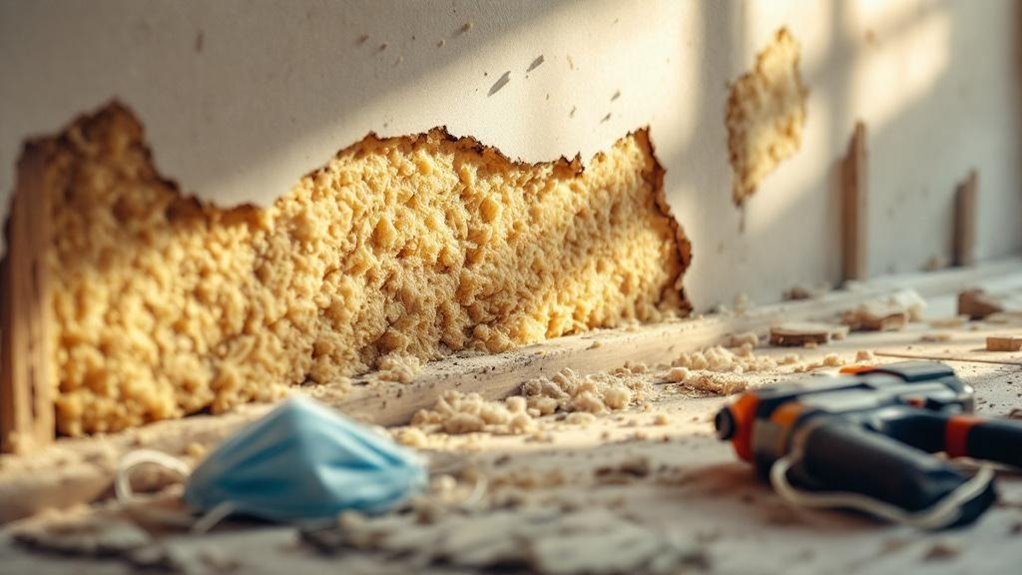
Finding asbestos during a renovation can derail your project timeline, but knowing how to respond protects your health and guarantees you’re following legal requirements. When you’re remodeling older homes, you’re likely to encounter materials containing asbestos—insulation, floor tiles, roofing, and drywall commonly harbor it. Your first step is stopping work immediately. Don’t disturb the material further, as this releases dangerous fibers into your air. Contact a certified asbestos inspection service right away. Professional testing through asbestos testing after disturbance protocols determines whether renovation asbestos actually exists. Certified inspectors can provide clear documentation of suspected materials to support your project planning decisions. Once confirmed, you’ll receive guidance on safe removal or encapsulation. Taking this methodical approach guarantees compliance with regulations and protects everyone on your jobsite. You’re making the responsible choice that qualified contractors respect.
Frequently Asked Questions
Is My Family at Risk if Asbestos Was Disturbed During Renovation Work?
Your family’s risk depends on the disturbance’s extent and duration. You’ll want professional air testing immediately to assess contamination levels. We’ll guide you through proper containment and remediation steps to protect your household safely.
How Much Does Professional Asbestos Inspection and Testing Typically Cost?
Think of professional inspection as your safety foundation—you’ll typically invest $400–$800 for residential testing. Your certified inspector will collect samples and analyze them, giving you the clarity you need to protect your home and family responsibly.
Can I Remove Asbestos Myself, or Must I Hire a Professional?
You can’t safely remove asbestos yourself. You’ll need a licensed professional who’s certified to handle hazardous materials. They’ll follow strict EPA protocols, contain the area properly, and dispose of it safely. It’s not worth the health risk.
Will Asbestos Discovery Affect My Home’s Resale Value or Insurance?
Yes, asbestos detection can impact your home’s value and insurance rates. You’ll need professional remediation documentation to reassure buyers and insurers. Transparent disclosure protects your reputation as a responsible property owner in our community.
What Legal Requirements Apply to Asbestos Handling in My State?
You’re steering through a maze of state-specific regulations that’ll make your head spin! Your state’s environmental agency sets asbestos protocols—you’ll need licensed professionals, written notices, and approved disposal methods. We’ll help you hit every requirement perfectly.
Conclusion
When asbestos surfaces during your renovation, you’re traversing treacherous waters that demand meticulous adherence to protocol. You’ve now charted the course: immediate work cessation, professional testing, and qualified remediation if needed. This systematic approach serves as your compass, guiding you safely through contaminated terrain. You’ll protect your health, guarantee legal compliance, and preserve your property’s integrity. Following these procedural steps transforms a potentially catastrophic revelation into a manageable remediation process.